
Course Design
TL1621 HCC Online Learning Certification Training
In the summer of 2021, the instructional designers in the Center for Teaching and Learning Excellence (CTLE) redesigned the existing TL1620 HCC Online Learning Certification Training. This training is a requirement for all HCC full-time faculty and is meant to provide the necessary knowledge and skills for using HCC’s learning management system, Canvas. The goal of the redesign was to utilize the Mastery Paths Canvas feature to allow instructors who already possess the necessary knowledge of Canvas to bypass content that they do not need.

Two of my colleagues who played a major role in this redevelopment project have provided the following letters of recommendation regarding my role in leading this project.
Texas Department of Criminal Justice Instructional Design Internship
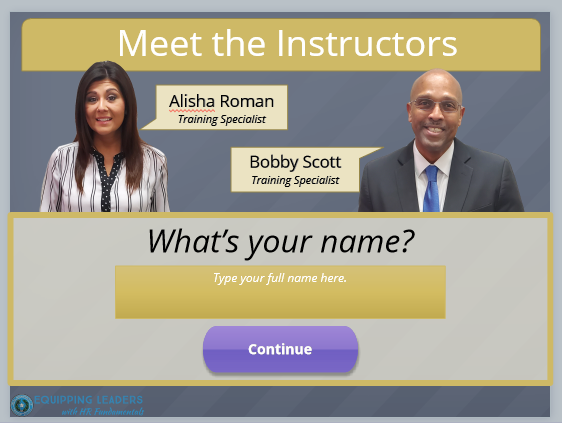
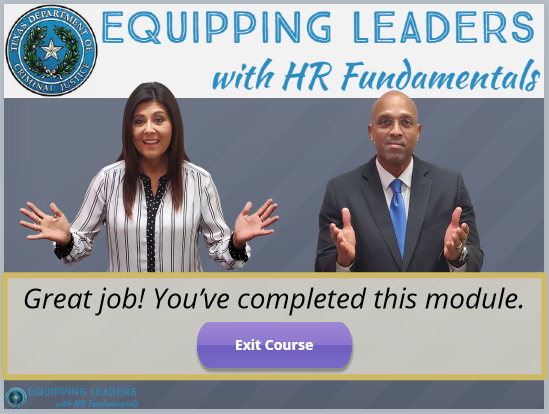
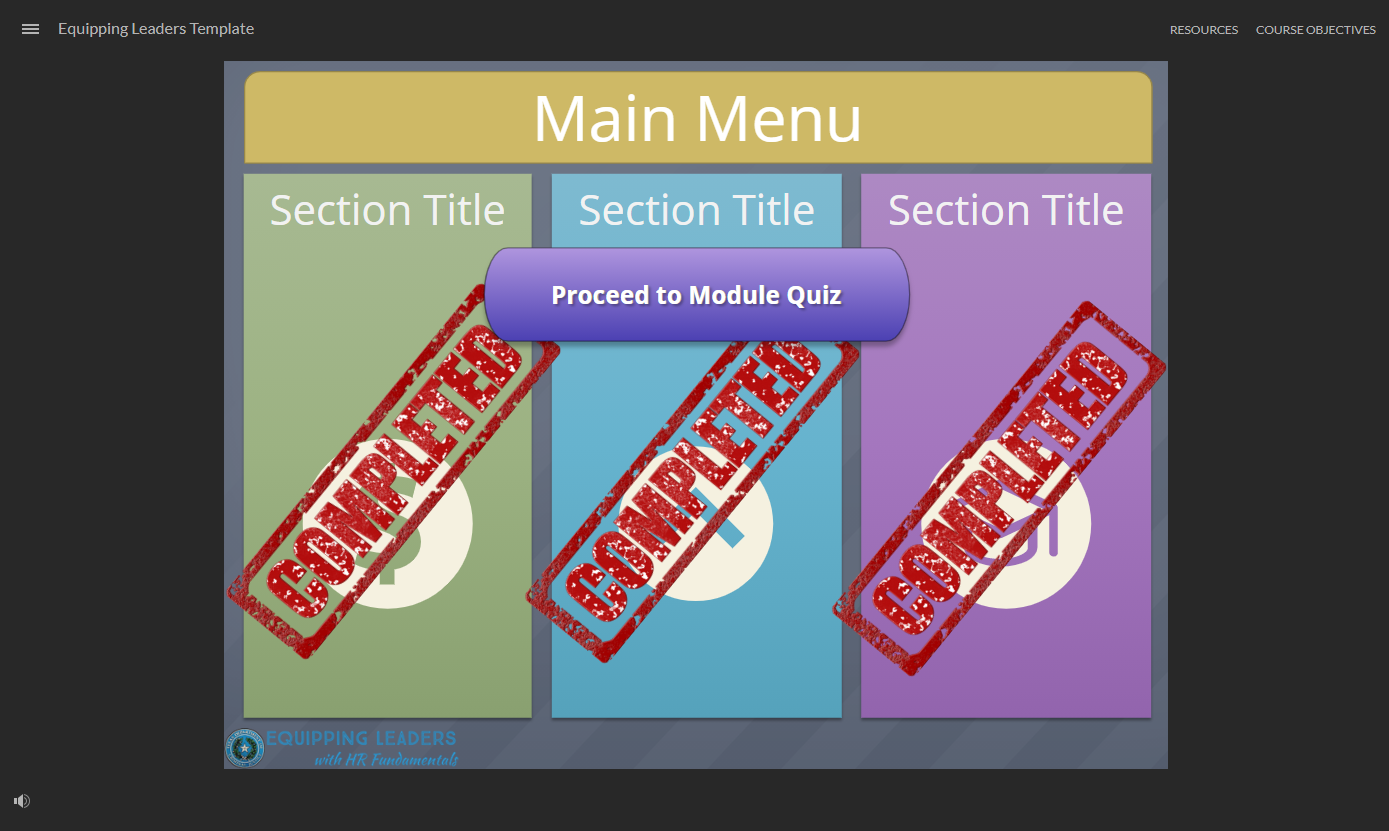
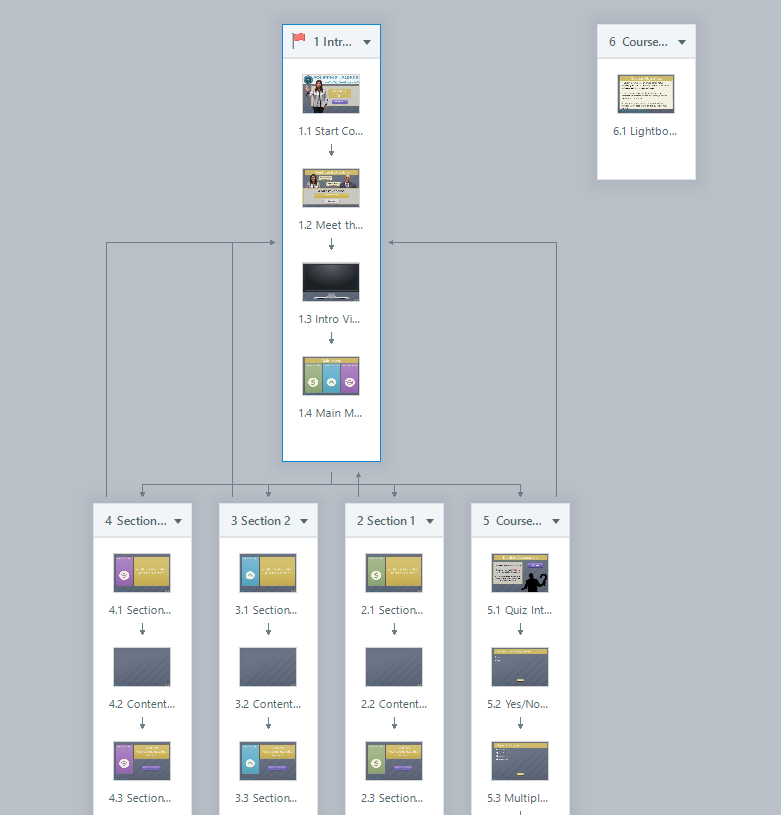
As a part of the inaugural group of interns, I collaborated directly with training specialists, subject matter experts, and instructors to develop asynchronous learning modules using Articulate Storyline 360. This internship lasted a total of 9 weeks, during which time I logged approximately 80 hours of work. In addition to working on existing learning modules and creating a new learning module from scratch, I also created the Equipping Leaders with HR Fundamentals logo seen in the screenshots below and developed a template that could be used for the creation of future learning modules.

Successful Online Teaching (Articulate Rise course)
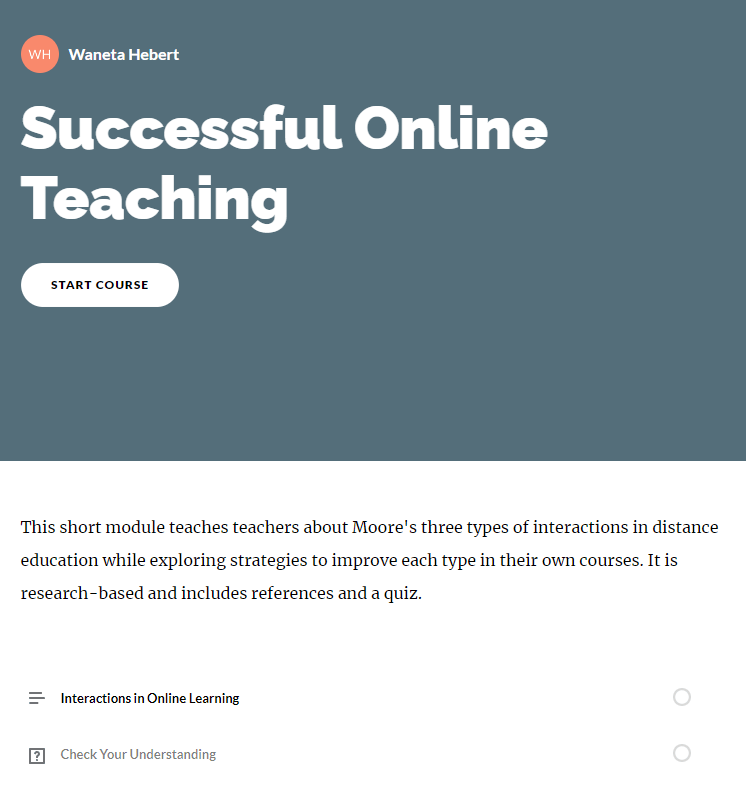
Overview: This short module teaches instructors about Moore’s three types of interactions in distance education while exploring strategies to improve each type in their own courses. It is research-based and includes references and a quiz. It was designed with higher education in mind but is applicable for instructors at all levels.
Master’s Capstone Project
My first hands-on experience with an instructional design method was my master’s capstone project, in which I used the Dick & Carey (2015) method to design one hour of instruction on sentence structures. I like to compare the process of that project to the lengthy lesson plans that I wrote as an undergraduate. When I entered the classroom, I rarely wrote lessons plans as detailed as those that I turned in to my education courses, but the process of completing those plans to that level of detail taught me how to think through all of the components that I needed. While I wouldn’t necessarily write out a rationale for each part of the lesson, I would think through the rationale. For me, instructional design is the same. I no longer spend months working through the method, but I do think through the process.
Instructional Materials
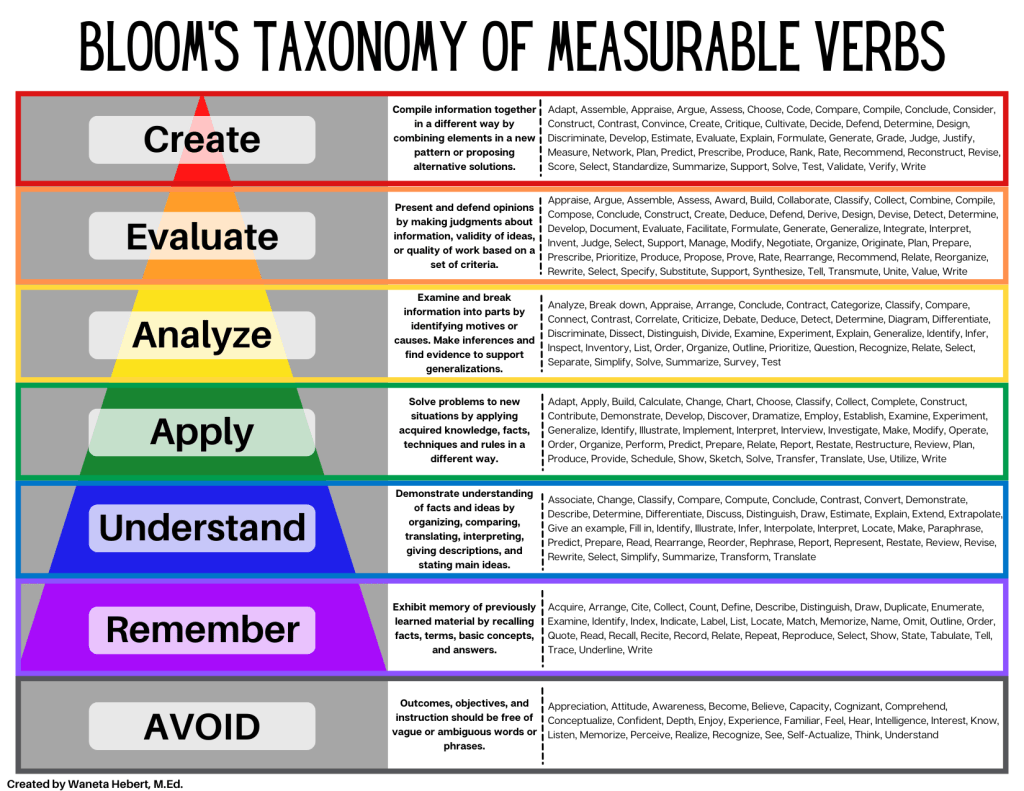
Job Aid: Bloom’s Taxonomy of Measurable Verbs
Four Keys to Using Issues & Controversies in Instruction: A Guide
This brief guide provides ideas for using Issues & Controversies in instruction. Written by instructional designer and doctoral candidate Waneta Hebert, this resource offers simple suggestions to build students’ coherent understanding of contemporary issues using the content and tools readily available in Issues & Controversies while also illustrating how supplemental resources can impact student learning. Learn how you can use Issues & Controversies to support critical thinking by:
- Engaging students with the power of choice
- Empowering students to explore their interests
- Elevating struggling students with additional support
- Extending high-achieving students to new heights
Four Keys to Using Films On Demand in Instruction: A Guide
This brief guide provides ideas for using Films On Demand in instruction. Written by instructional designer and doctoral candidate Waneta Hebert, this resource offers simple suggestions on how you can use Films On Demand in your courses by:
- Engaging students with the power of choice
- Empowering students to explore their interests
- Elevating struggling students with additional support
- Extending high-achieving students to new heights
Four Keys to Using Credo Reference in Instruction: A Guide
This brief guide provides ideas for using Credo Reference in instruction. Written by instructional designer and doctoral candidate Waneta Hebert, this resource offers simple suggestions to support basic research instruction using the content and tools readily available in Credo Reference while also illustrating how supplemental resources can impact student learning. Learn how you can use Credo Reference to build confident researchers at your institution by:
- Engaging students with the power of choice
- Empowering students to explore their interests
- Elevating struggling students with additional support
- Extending high-achieving students to new heights
Using Bloom’s Literature in the Classroom: Theme & Summary Guide
This brief guide provides ideas for using the award-winning Bloom’s Literature in the classroom. Written by Instructional Designer / former English teacher Waneta Hebert, this helpful resource offers easy ways to support the “Theme & Summary” literature module using content readily available in Bloom’s Literature while also illustrating how supplemental resources can impact student learning. Learn how you can use Bloom’s Literature to help students apply literary skills and:
- Engage students with the power of choice
- Empower students to explore their interests
- Elevate struggling students with additional support
- Extend high-achieving students to new heights
 Waneta Hebert